
Arrest Records in Cameron County
Arrest records come from law enforcement. In Cameron County, the Sheriff's Office runs the jail system and posts a public inmate list. City police departments, constables, DPS troopers, and other agencies also make arrests, and the person is usually booked into a county facility. A booking record shows the basics: who was held, the booking date, a booking number, an SO number, and the charge. The charge is for reference only. The county states that everyone shown is innocent until proven guilty in a court of proper jurisdiction.
Arrest records are not the same as criminal court records, and they are not the same as a conviction. An arrest happens first. A court case begins only when a prosecutor files a charge. The outcome, whether a dismissal, a plea, or a sentence, lives in the court file, not the jail roster. So a booking can show on the roster while no case has been filed yet, and a case can show a warrant after the person has left the jail. For the full case history and disposition, the Cameron County court records page covers the clerk files.
How to Search Cameron County Arrest Records
Start with the Sheriff's jail roster for current and recent bookings. It is a searchable table that lists people held now and within the last seven days. It updates every two hours. It is not comprehensive, and it excludes federal prisoners and detainees. For prosecution detail, the District Attorney handles felony and misdemeanor cases. Cameron County uses a combined County and District Attorney office, and Luis V. Saenz is named as the County and District Attorney in county and state materials.
The District Attorney page covers prosecution, victim assistance, and law-enforcement coordination. See the Cameron County District Attorney page for the office that prosecutes arrests into court cases.
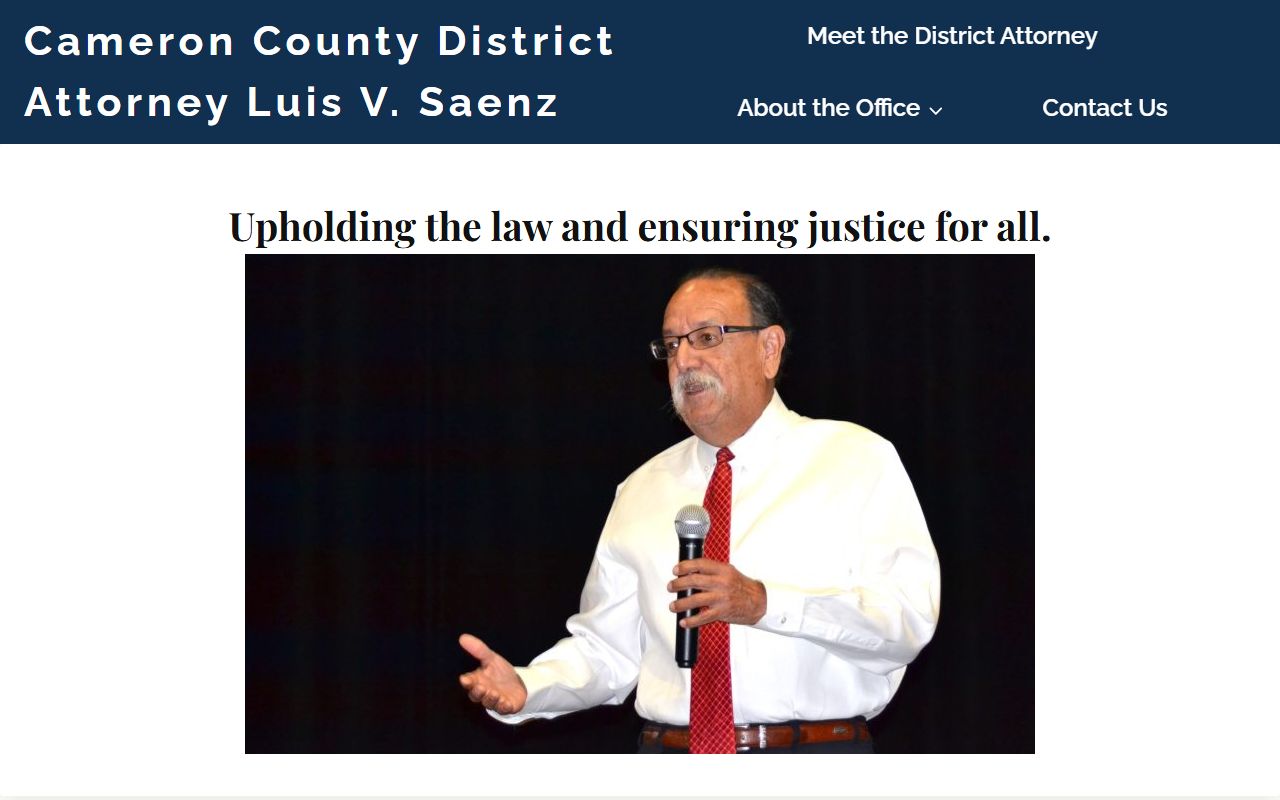
The District Attorney turns an arrest into a filed charge, so a booking on the roster may not yet match a case in the court portal.
- Open the Sheriff's inmate list and type a name into the search box to filter the roster.
- Read the booking date, booking number, SO number, and charge text for the match.
- For case outcome, move to the court portals through the District Clerk or County Clerk.
- For statewide criminal history, use the Texas DPS Crime Records Service, which has its own fees and rules.
State-level history is broader than a single county. The Texas Department of Public Safety keeps criminal history record information statewide. It is the source many employers and agencies use, and it follows different access rules than a local jail roster.
The DPS Crime Records Service explains how to request criminal history. View the Texas DPS Crime Records Service for the statewide criminal records process and fees.
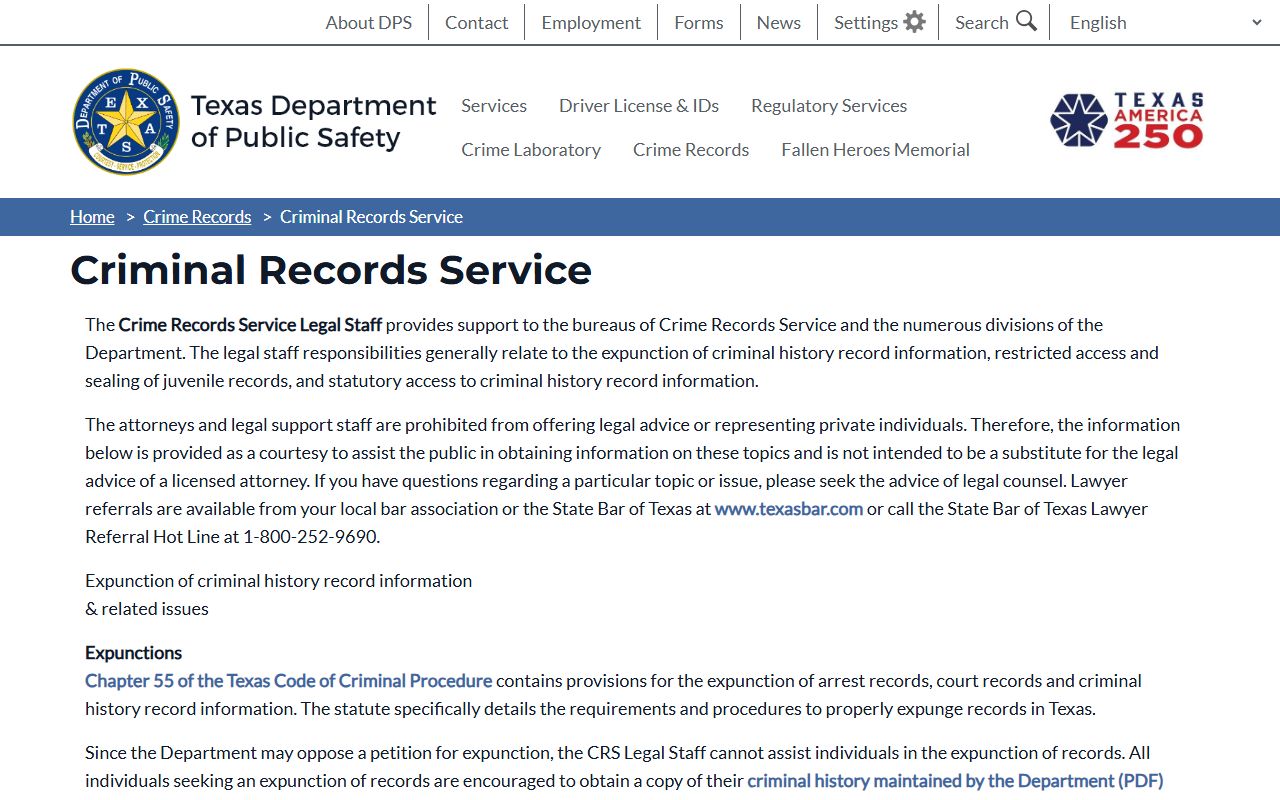
DPS history may have a different scope than a Cameron County jail booking, so the two records can read differently for the same person.
Arrest Records vs. Criminal Court Records
The two records are made by different offices at different stages. An arrest record is born at booking and kept by the Sheriff or the arresting agency. A criminal court record begins when charges are filed and is kept by the court clerk. In Cameron County, felony court files sit with the District Clerk and county court at law misdemeanor files sit with the County Clerk. The arrest record tells you about the custody event. The court record tells you about the case and how it ended.
| Arrest Record | Criminal Court Record | |
|---|---|---|
| Source | Sheriff or arresting police agency | District Clerk or County Clerk |
| Created When | At booking | When charges are filed |
| Contents | Booking date, charge, booking and SO number, mugshot | Indictment or information, pleas, motions, orders, disposition |
| Where to Look | Sheriff inmate list | Court portals through the clerks |
For active warrants tied to an arrest, the Cameron County warrant records page explains the verification routes.
Charges vs. Convictions
Being charged is not the same as being convicted. A charge is an accusation. It only takes probable cause to make an arrest or file a charge. A conviction needs a verdict or a plea, and the state must prove the case beyond a reasonable doubt. Many arrests never become convictions. A case can be dismissed, a grand jury can no-bill a felony, or a jury can acquit. The booking still exists as an arrest record even when no conviction follows.
| Charge | Conviction | |
|---|---|---|
| Stage | Accusation at or after arrest | Verdict or plea at case end |
| Burden of Proof | Probable cause | Beyond a reasonable doubt |
| Charging Document | Complaint, information, or indictment | Judgment and sentence |
| Public Record | Yes, unless restricted | Yes, unless restricted |
Note: A dismissal or acquittal may make an arrest eligible for expunction, which can remove the qualifying arrest and court records.
Sealed vs. Expunged Records
Texas uses two separate remedies, and they are not the same. Expunction is the stronger one. Under Code of Criminal Procedure Chapter 55, an expunction can remove qualifying arrest records, court records, and criminal history information, often for acquittals, pardons, and certain dismissals. Nondisclosure is a sealing-style remedy under Government Code Chapter 411. It limits public release of qualifying records, often after deferred adjudication, but it does not erase the record for all government use. So an expunged record is treated as if it never existed, while a sealed record is hidden from the public but still reachable by some agencies.
| Sealed (Nondisclosure) | Expunged | |
|---|---|---|
| Visibility | Hidden from public | Destroyed and treated as if it never happened |
| Law Enforcement | Limited access for licensing and some agencies | Very limited access |
| Eligibility | Often deferred adjudication and other qualifying outcomes under Chapter 411 | Acquittals, pardons, and certain dismissals under Chapter 55 |
| Effect | Public dissemination is limited | Records are removed and use is barred by statute |
The District Clerk lists an expunction contact at dcexpunctions@co.cameron.tx.us and (956) 544-0839 for district court cases. The County Clerk criminal department handles its own expunction requests at cameronclerkexpunctions@co.cameron.tx.us and (956) 544-0848. A petition can be denied if the person is ineligible, a waiting period has not run, or required agencies were not served.
Texas has a state guide that walks through both remedies. View the State Law Library expunction and nondisclosure guide to compare eligibility before you file.
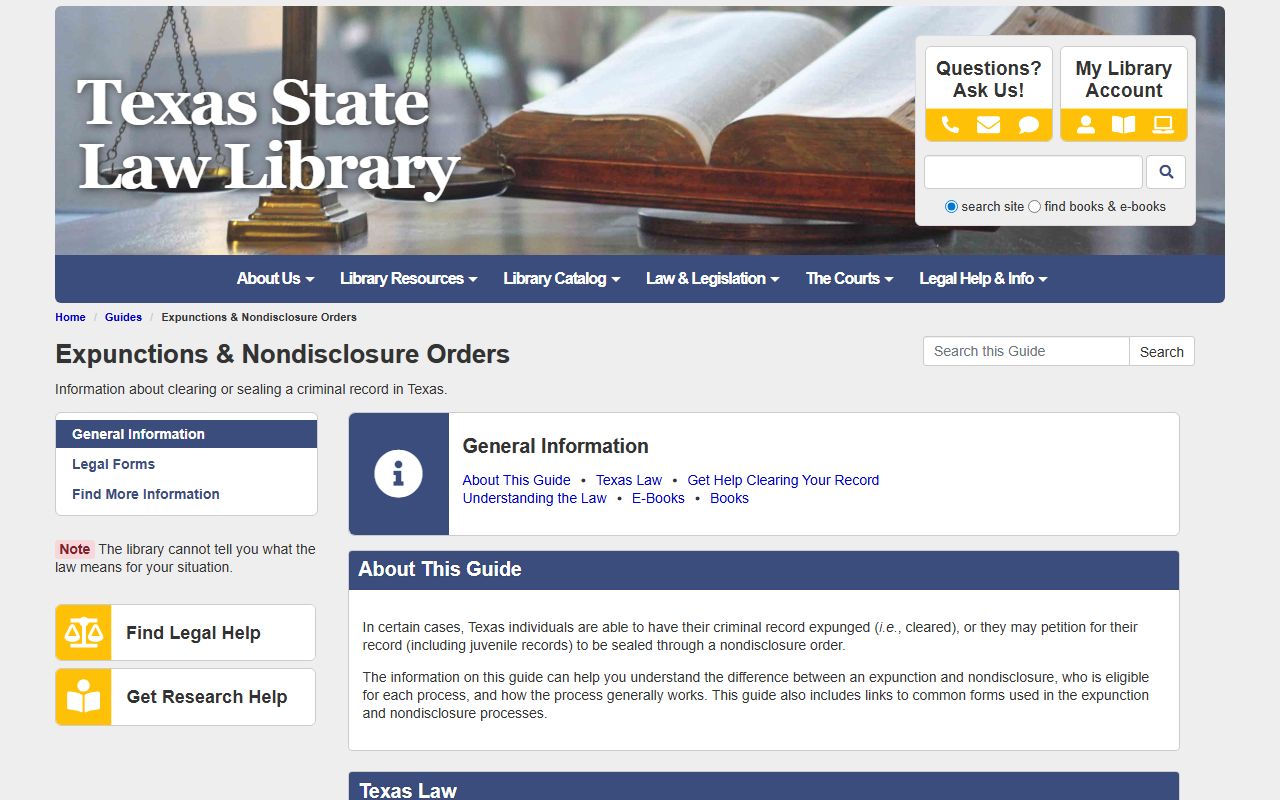
That guide helps a person decide whether an arrest qualifies for full expunction or only for nondisclosure before they spend a filing fee.
Orders of nondisclosure are set out in statute. View Government Code Chapter 411 on orders of nondisclosure for who can petition and what the order does.
Because nondisclosure only limits public release, a sealed Cameron County record can still be seen by licensing boards and some agencies.
Mugshots and Booking Photos
The Sheriff's inmate list shows a mugshot thumbnail for each booking. The roster renders the photo from a picture field next to the booking date, the defendant name, the booking number, the SO number, and the charge. The image is a small thumbnail, not a full profile page; the official interface did not show an individual profile page during research. A booking photo is part of the public arrest record while the person is in the roster's scope.
A mugshot is not proof of guilt. The county warns that the charge is for reference only and is not an indication of guilt. If a case ends in dismissal, acquittal, or expunction, the public arrest data tied to it can be removed or restricted by law.
Statewide Criminal Records Search
A county jail roster is local. For a statewide picture, the Texas Department of Public Safety Crime Records Service keeps criminal history record information for the state. DPS explains that Chapter 55 expunction reaches arrest records, court records, and criminal history information held by the state. The state repository follows its own dissemination rules, and an expunction or nondisclosure order should be sent to DPS and the named agencies so the state record is updated.
County court files and the jail roster are separate from the DPS record. A person may show in a Cameron County booking but appear differently in the statewide history, because each source has a different scope. For prosecution data behind a charge, the District Attorney is the office that files and tries criminal cases in Cameron County.
Background Check Considerations
There is a real difference between a casual lookup and a regulated background check. A jail roster search or a DPS criminal history request can answer a personal question. A background check used for credit, employment, tenant screening, or insurance is regulated by the federal Fair Credit Reporting Act, and it must come from a compliant consumer reporting agency. The two are not interchangeable, and a public arrest record on its own is not an FCRA-compliant report.
Important: This site is not a consumer reporting agency under the FCRA, and its information may not be used for credit, employment, tenant, or insurance decisions.
Restricted Criminal Records in Cameron County
Some criminal records are closed by law. Juvenile records are restricted under the Texas Family Code, and access is usually limited to the juvenile, parents or guardians, attorneys, agencies, and people with statutory authority or a court order. Juvenile arrest and court records are not in the same public criminal portal as adult files. Sealed and expunged records are limited by statute after the order is granted. Active investigation records can be withheld when release would interfere with detection or prosecution. Mental health and medical information is protected, and the jail will not release inmate medical details to family.
Juvenile confidentiality is set out in statute. View Family Code Chapter 58 on juvenile records for how juvenile justice records are sealed and shared.
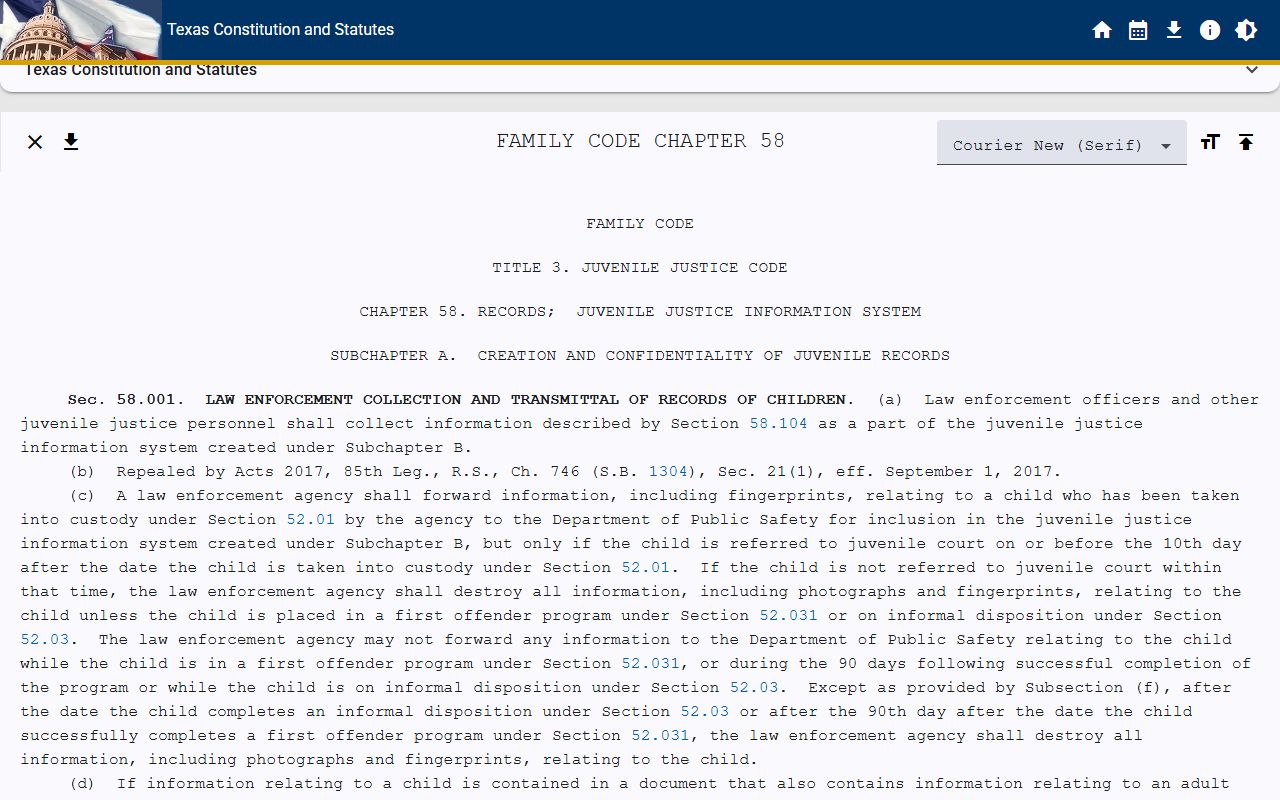
Because of these rules, a Cameron County juvenile arrest will not appear in the same public search as an adult booking.
If a person cannot afford a lawyer, Cameron County Pretrial Services screens court-appointed attorney applications for district, county, magistrate, and municipal courts. Not everyone qualifies, and required documents must be submitted to avoid delays.