
What Probate Covers in Cameron County
Probate is the court process for handling what a person owns and owes after death, and for protecting people who cannot care for themselves. In Cameron County, probate and guardianship cases protect the wishes, rights, and obligations tied to property when a person cannot act because of death or an incapacitating illness. So the work ranges from proving a will to naming a guardian for a minor or a disabled adult. Estates with a will and estates without one both pass through this process.
The County Clerk Probate Department files, records, and maintains these records. Cameron County also runs probate courts that hear the cases. The county explains the court side on its Cameron County Probate Courts page, which describes how probate matters move through the local bench.
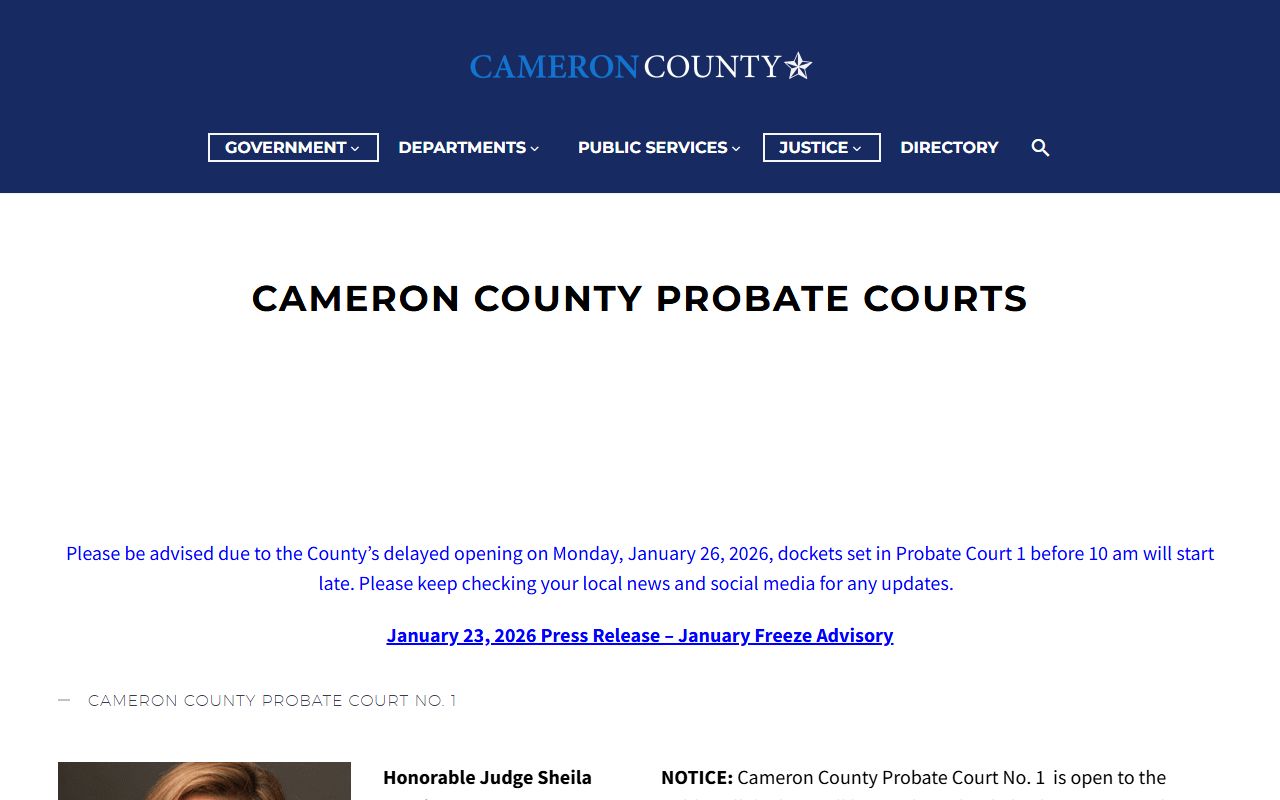
That page is a good first stop when you are not sure whether your matter is an estate case, an heirship case, or a guardianship.
Probate Terms Defined
Probate files use words that do not show up in daily life. A quick guide helps you read a case summary or a clerk form without guessing. These are the terms you will run into most often in Cameron County probate records.
- Testator
- The person who made the will.
- Executor
- The person named in the will to settle the estate and carry out its terms.
- Intestate
- Dying without a valid will, which sends the estate through the heirship process.
- Guardianship
- A court appointment of a person to care for a ward, a minor or adult who cannot care for themselves.
- Conservatorship
- A court arrangement where a person is named to manage another person's care or property.
- Muniment of Title
- A Texas procedure that admits a will mainly to transfer title to property, with no full administration.
- Letters Testamentary
- The document that authorizes an executor to act for the estate.
How to Search Cameron County Probate Records
The Probate Department tells users to search existing probate cases through the statewide public portal. Some records and images are online; some older files are only at the courthouse. If you cannot find a record online, the office takes a written request with a copy fee. Start with the case type and the names, then pick the tool.
- Open the statewide public portal at re:SearchTX and search by party name or case number.
- If the case predates the online index or is not posted, contact the County Clerk Probate Department by email or phone.
- Submit the Civil-Probate Request Form with the decedent name, year, and cause number if known, then pay the copy or search fee.
The portal the Probate Department links is the statewide court records search. You can reach it directly at re:SearchTX, which is the same public site the District Clerk uses for other court files.
The Probate Department also links probate online payments and the Civil-Probate Request Form for records that cannot be pulled online. The court calendar link points to iDocket. So a single department page covers searching, paying, and ordering copies. The County Clerk also keeps its probate work on a dedicated department page. The County Clerk Probate Department page lists case types, the request form, online payments, and the court calendar link.
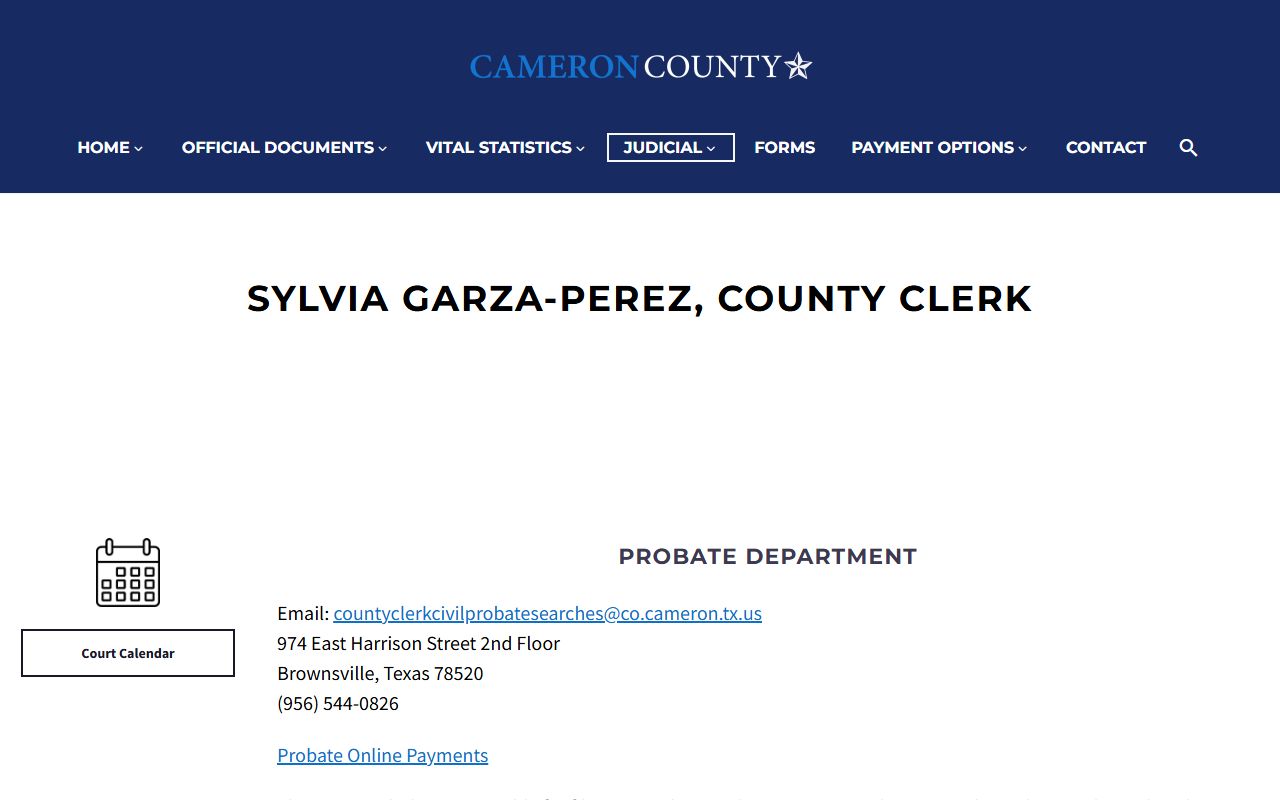
From that page you can move straight to the portal, the payment tools, or the request form without hunting through the rest of the county site.
Types of Cameron County Probate Cases
The Probate Department lists the case types it files. Each one fits a different situation, from a simple will to a small estate with no real property. Knowing which type your matter is tells you which forms to use and what the court will need.
- Probate of Will and Issuance of Letters Testamentary - proves the will and lets the executor act.
- Probate of Will as a Muniment of Title - admits a will mainly to transfer title, with no full administration.
- Letters of Administration - names an administrator when there is no executor.
- Determination of Heirship - decides who inherits when a person dies without a will.
- Small Estate Affidavit - used when there is no will, the estate is worth less than $75,000, and no real estate is involved.
- Guardianship of the Person and/or Estate - filed when a minor or disabled person needs help and a court-approved guardian.
The small estate affidavit is a popular shortcut, but it only works when all three conditions are met. The department links an administrative order, a county checklist, and the affidavit form for that path.
Probate Office in Cameron County
The County Clerk Probate Department is the office that files and keeps probate records. It sits in the judicial building on East Harrison Street in Brownsville, on the second floor, near the other court-facing clerk departments. Use the contact below to ask about a case, a form, or a copy request.
Cameron County Clerk Probate Department
974 E. Harrison St., 2nd Floor
Brownsville, TX 78520
(956) 544-0826
Mon-Fri, business hours
Probate Email Searches
countyclerkcivilprobatesearches@co.cameron.tx.us
Civil & Probate Department
(956) 544-0826
Use for case and copy questions
The County Clerk Judicial page ties together the probate, civil, criminal, and court-calendar tools in one place. See the County Clerk Judicial page to confirm you are starting from an official link.
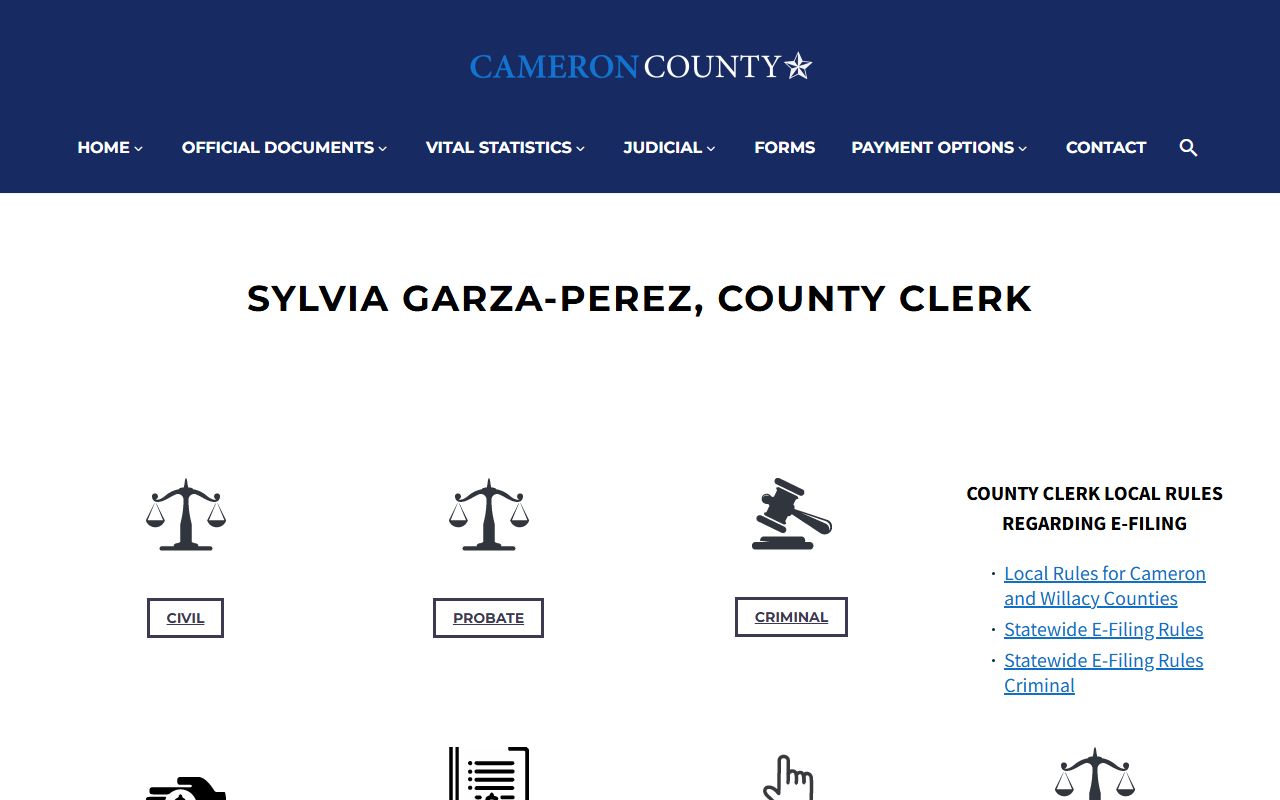
That hub helps when a matter touches both probate and county civil records, since both run through the County Clerk.
Probate Copy and Records Fees
Copy fees for probate records come from the County Clerk fee schedule and the Civil-Probate Request Form. A search fee, a plain copy fee, and a certified copy fee are three separate charges. Letters and certificates have their own set prices. Filing fees for opening a probate case are listed separately in the county fee schedule, so confirm those before you file.
| Item | Amount |
|---|---|
| Plain copy | $1 per page |
| Certified copy | $5 plus $1 per page, per document |
| Records search | $5 |
| Letters | $2 each |
| Certificate as to letters | $6 |
| Certificate of authentication | $15 |
Note: A certified copy of letters testamentary is the document banks and title companies usually ask for, so order that rather than a plain copy when the estate touches property or accounts.
What Cameron County Probate Records Show
A probate file builds up over the life of the case. Early on it holds the application and the will. As the case moves, the court adds orders, the oath, any bond, and the inventory of estate property. Later filings include annual accounts, annual reports for guardianships, proof of death, certificates of death, and the letters that authorize a fiduciary to act.
The Civil-Probate Request Form lists the documents you can ask for by name. Those include the oath, the inventory and order, the annual account and order, the annual report and order, the will and order, proof of death, the certificate of death, citations, and the certificate of authentication. You can also request the entire file, but page charges add up fast across a long estate. The County Clerk forms page holds the request form and related probate documents.
See the County Clerk forms page for the Civil-Probate Request Form, the small estate affidavit packet, and the guardianship registration form.
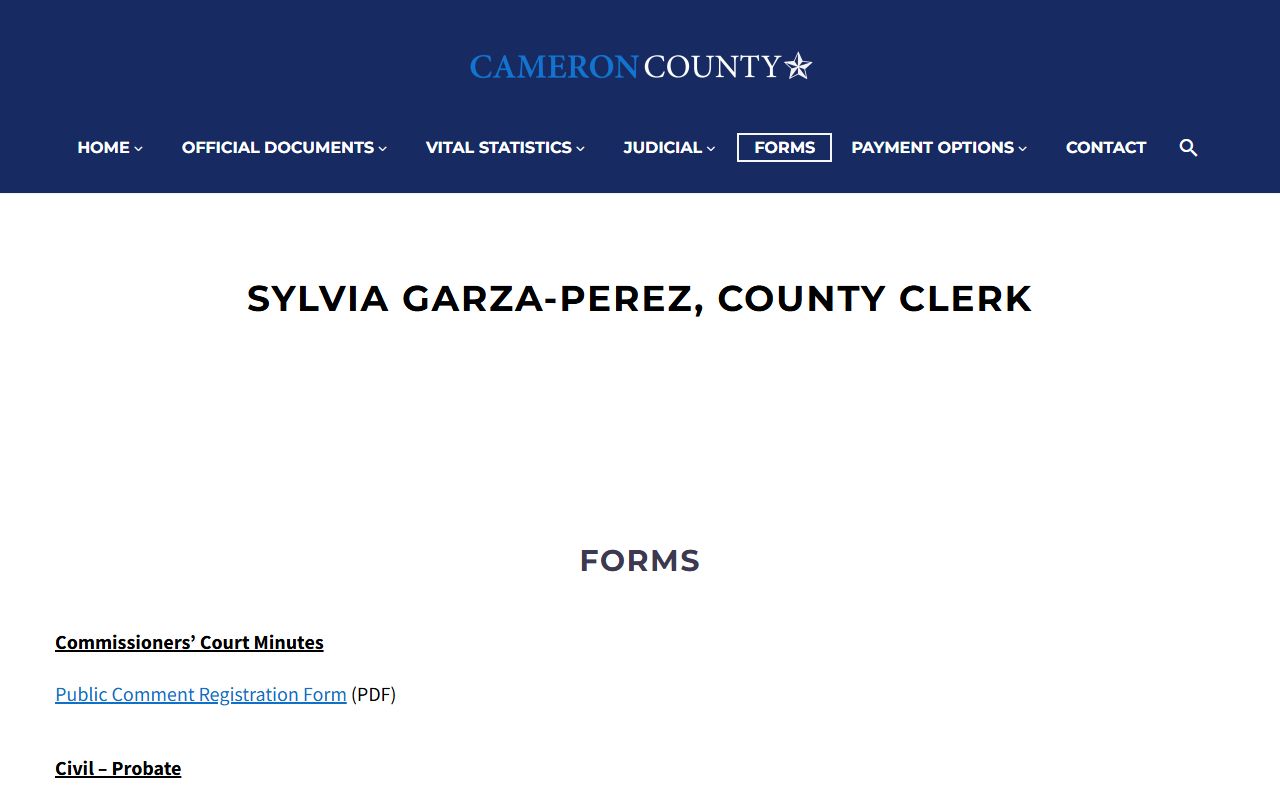
Downloading the right form first cuts back-and-forth with the office and helps your request go through on the first try.
Restricted Probate Records
Most probate records are public, but not all. Guardianship files that involve a minor or a disabled adult can carry sensitive medical and personal details, and parts may be restricted. Mental health materials are heavily protected. The Probate Department itself directs users to the Texas Department of State Health Services for mental health information rather than treating those records as open files.
Sealed estate records follow court rules, and a person with standing usually must file a motion to view a sealed file. Medical and financial identifiers are redacted under state privacy law. If a record you need is restricted, ask the Probate Department what is required, since some files need a court order before release. For the broader rules on what stays private, see the county public records page.
Guardianship cases add their own paperwork over time, which can affect what is open. The county uses forms such as the Annual Report on the Condition and Well-Being of a Ward and the Annual Account for Guardianship. Those filings track a ward's care and finances year by year, and parts that hold health or financial detail may be limited. A certificate of authentication, priced at $15, is sometimes needed when a probate document must be used outside Texas. When in doubt, call the Probate Department at (956) 544-0826 and ask what a specific record requires before you mail a request.