
Texas Public Information Act
The Texas Public Information Act sits in Government Code Chapter 552. It sets a state policy in favor of complete information about the affairs of government and the official acts of public officials. That policy reaches county offices such as the Sheriff, the commissioners court, and the non-judicial administrative records of the county. Anyone can ask, and a requester does not have to give a reason. You can read the statute on the official site at Texas Government Code Chapter 552.
A public record is information that a governmental body collects, assembles, or maintains in connection with public business. Under Section 552.021, that information is available during the normal business hours of the office. The Act also has limits. A department that wants to withhold records often must ask the Texas Attorney General for a ruling, unless a prior determination or a mandatory redaction already applies. So access is broad, but it is not absolute.
Important: A court-record search is not a background check. The county portal is not a DPS criminal history search, an FBI summary, or a fingerprint-based licensing review, and it should not be used for employment, tenant, or firearm eligibility decisions.
What Records the County Clerk Maintains
The County Clerk is the main keeper of recorded public records in Cameron County. Sylvia Garza-Perez is the County Clerk, and her office calls the recording of legal instruments its most traditional and basic duty. Those instruments make up the largest share of the office's paperwork and storage. Beyond court files, the office keeps a wide set of records.
- Real property and land records, such as deeds, liens, and plats.
- Assumed business name and DBA filings.
- Marriage licenses and vital statistics.
- Commissioners court minutes.
- Foreclosure sale notices and official public records.
Most of these are searchable through the County Clerk's official records portal. The portal at Cameron County Official Records Search lets you search by grantor or grantee name, subdivision, document type, or document number, with date-range filters.
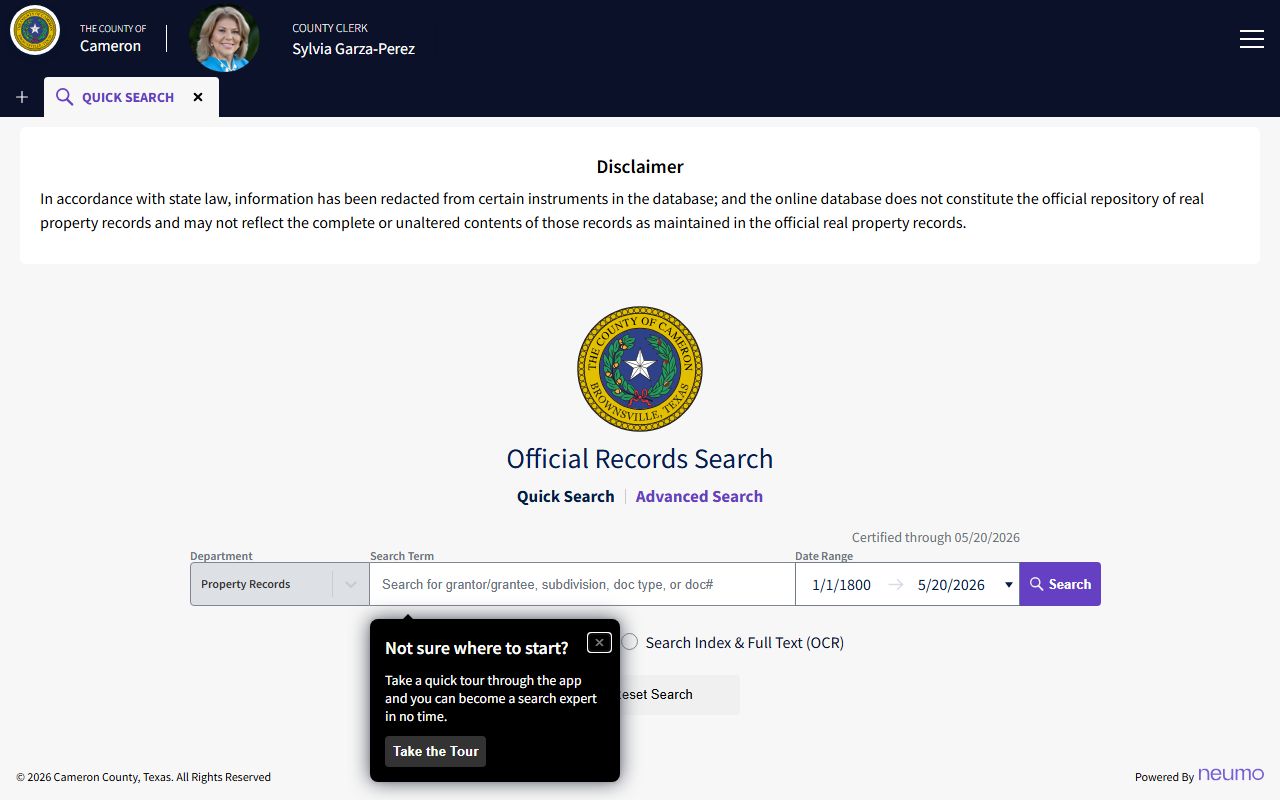
The index search is free, though buying or downloading a document image may carry a fee.
Older official records are in a separate historical system. The County Clerk identifies records from 1848 to 1912 and links them through a dedicated archive. View the Cameron County historical records quick link for those early documents.
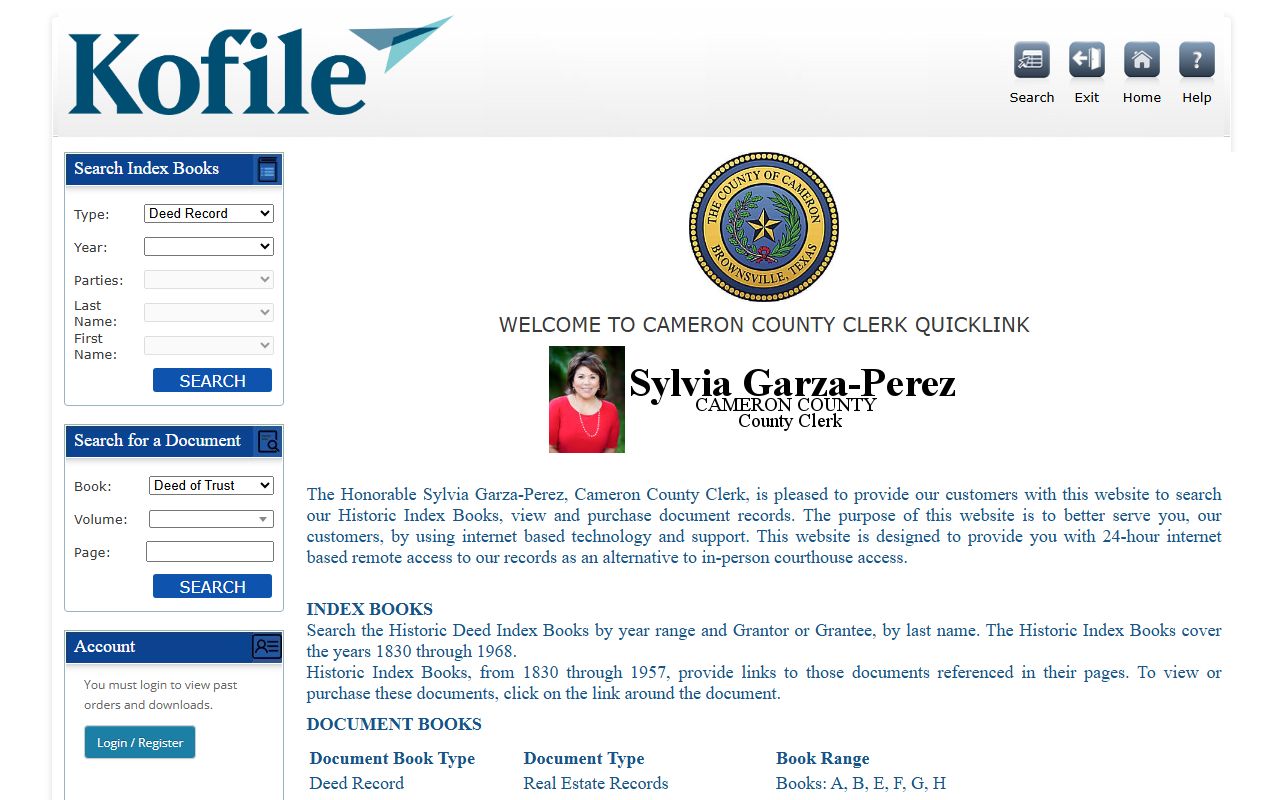
Researchers and genealogists use that archive when a record predates the modern index.
Public Records vs Court Records
Not every government record follows the same access rule. The Texas Public Information Act governs executive-branch and local-government records. Court case files are treated differently. Government Code Section 552.0035 says access to information maintained by or for the judiciary is governed by rules adopted by the Supreme Court of Texas, not the Public Information Act.
The practical effect is simple. A request for Sheriff body camera footage is a Public Information Act request. A request for a case file goes through the clerk and court records process instead. So you should not call every court-record request a FOIA request, and you should not assume a public records form will pull a sealed or restricted case. The County Clerk Civil Department handles county civil case records, and its work shows how court files run on a separate track from open government records. See the County Clerk Civil Department page for that side of the office.
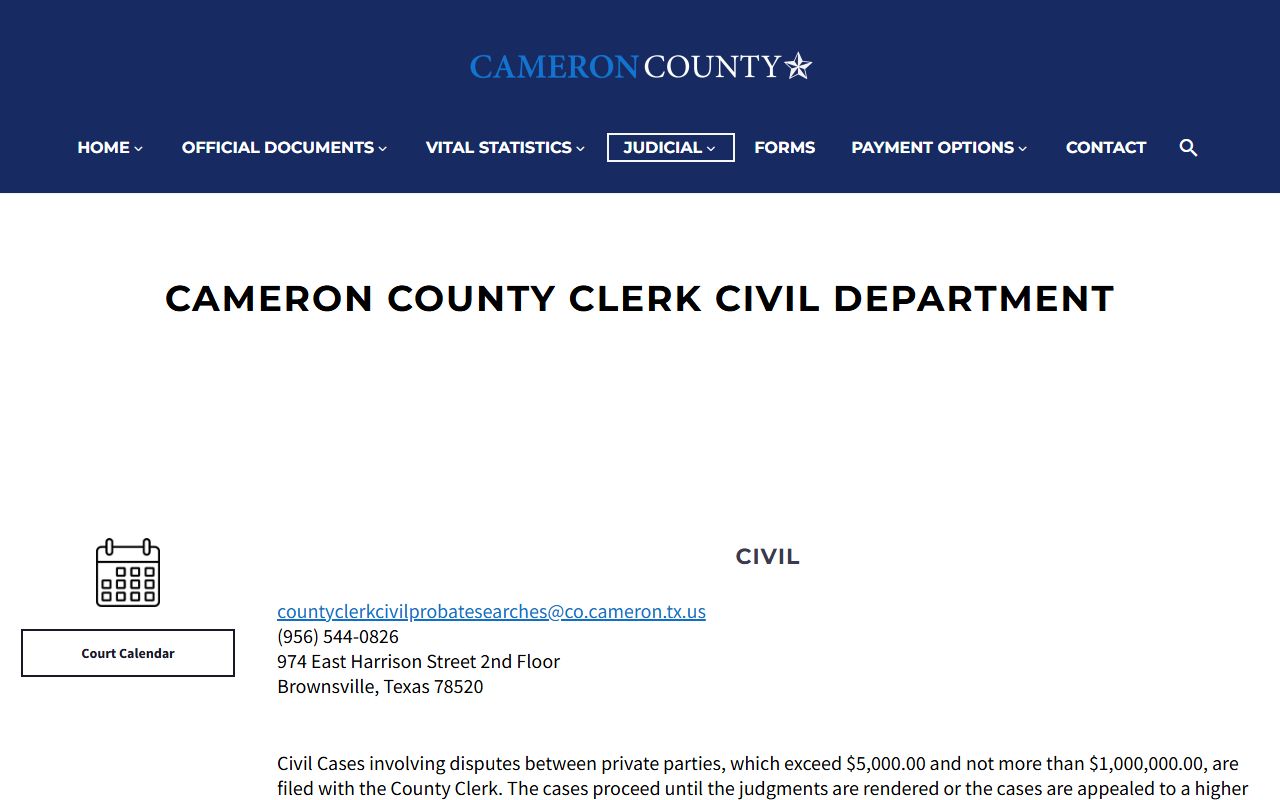
That division is why a deed search and a lawsuit search start in different tools even though both run through the County Clerk.
How to File a Public Records Request in Cameron County
Most public records requests go to the office that holds the record. You can submit in writing by mail or email, and some records are also available in person. A clear description speeds things up and lowers the fee. Follow these steps.
- Identify the right office. Deeds and recorded documents go to the County Clerk; Sheriff and commissioners court records go to those bodies.
- Describe the records you want with enough detail, such as names, document type, and a date range.
- Submit the request by mail, email, or the office's online tool, and address it to the records custodian.
- Wait for the response; the office may produce the records, ask for clarification, or seek an Attorney General ruling to withhold.
- Pay any copy or labor fee, then receive the records in the format you asked for when possible.
For County Clerk contact details and the correct department, the County Clerk contact page lists the main office, branches, and department phone numbers.
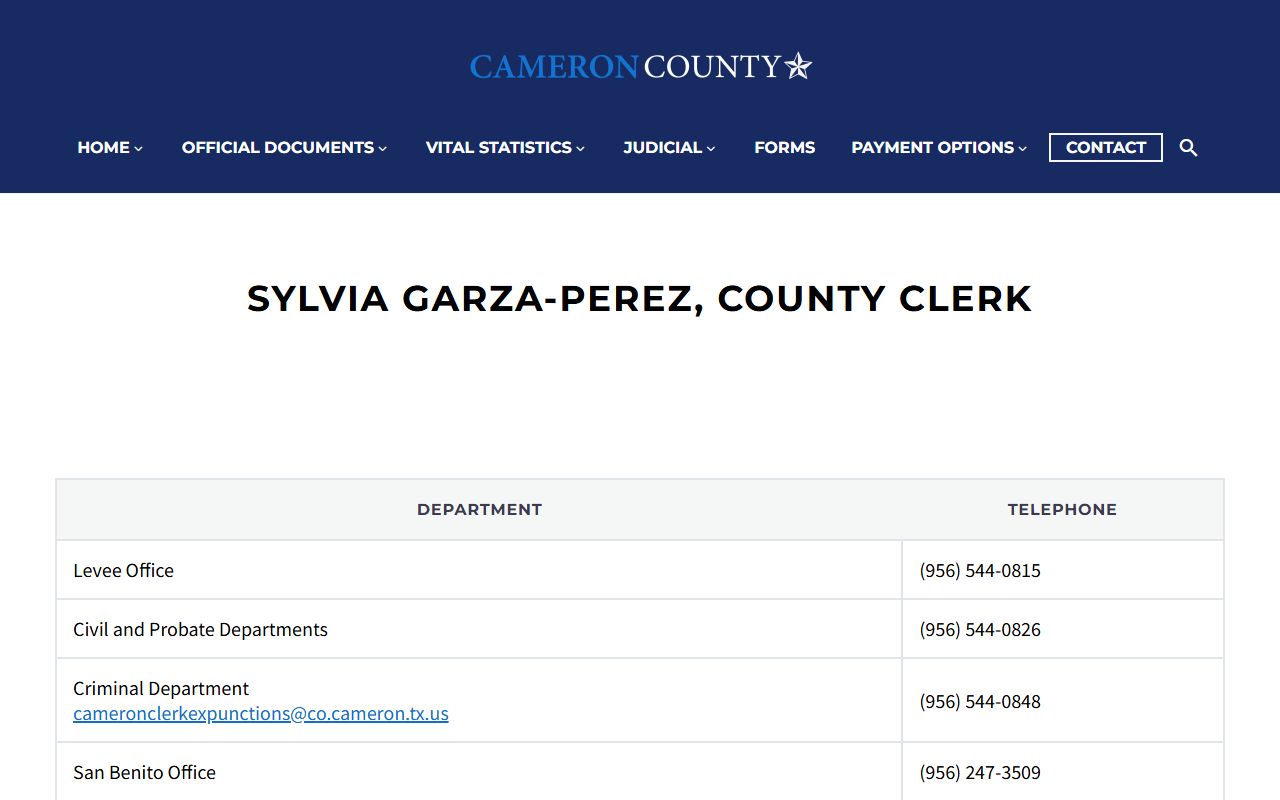
Sending your request to the precise department, rather than a general line, gets it to the right staff faster.
Public Records Request Form Fields
The County Clerk's Civil-Probate Request Form shows the kind of information a records request needs. Even when no formal form is required, including these details helps the office find and produce the record. The more precise the description, the faster the response.
| Field | Required | Notes |
|---|---|---|
| Requester Name | Yes | Name, plus address, city, state, ZIP, and phone. |
| Description of Records | Yes | Party or decedent name, document type, and what you want. |
| Year or Date Range | No | Year of death or filing narrows the search. |
| Cause / Document Number | No | A case or instrument number pinpoints the record. |
| Copy Type and Quantity | Yes | Plain or certified, with the number of pages or copies. |
| Delivery Choice | Yes | Pickup, mail, certified mail, or process server. |
| Signature and Date | Yes | The requester signs to authorize the request. |
Note: A request for the "entire file" can run up page charges across many pleadings and exhibits, so name the specific documents when you can.
Response Timelines
The Texas Public Information Act expects a governmental body to promptly produce records that are clearly public. When an office believes a record may be withheld, it generally must seek an Attorney General decision within a set period, often ten business days, rather than simply refusing. The office may also ask you to clarify or narrow a broad request, which can reset the clock.
Recorded documents at the County Clerk are usually available right away through the official records portal, since the index is open and the office is built for high-volume recording. Court files follow the clerk and court rules instead of these deadlines. If a response runs late or a record is withheld without a ruling, you can raise the issue with the Texas Attorney General Open Records Division.
Public Records Fees in Cameron County
County Clerk fees come from the official fee schedule, which cites Local Government Code Chapter 118 as the authority for recording and copy charges. Recording fees are higher than simple copy fees because they include records management and archive components. The figures below reflect the County Clerk schedule.
| Item | Amount |
|---|---|
| Real property recording, first page | $35 total |
| Each additional page | $4 per page |
| Each indexed name over five | $0.25 |
| Plain copy | $1 per page |
| Certified copy | $5 plus $1 per page, per document |
| Records search | $5 |
The first-page recording fee of $35 breaks down into a $5 recording charge, $10 records management, $10 records archive, and $10 courthouse construction. The fee authority is set in state law, which you can read at Local Government Code Chapter 118.
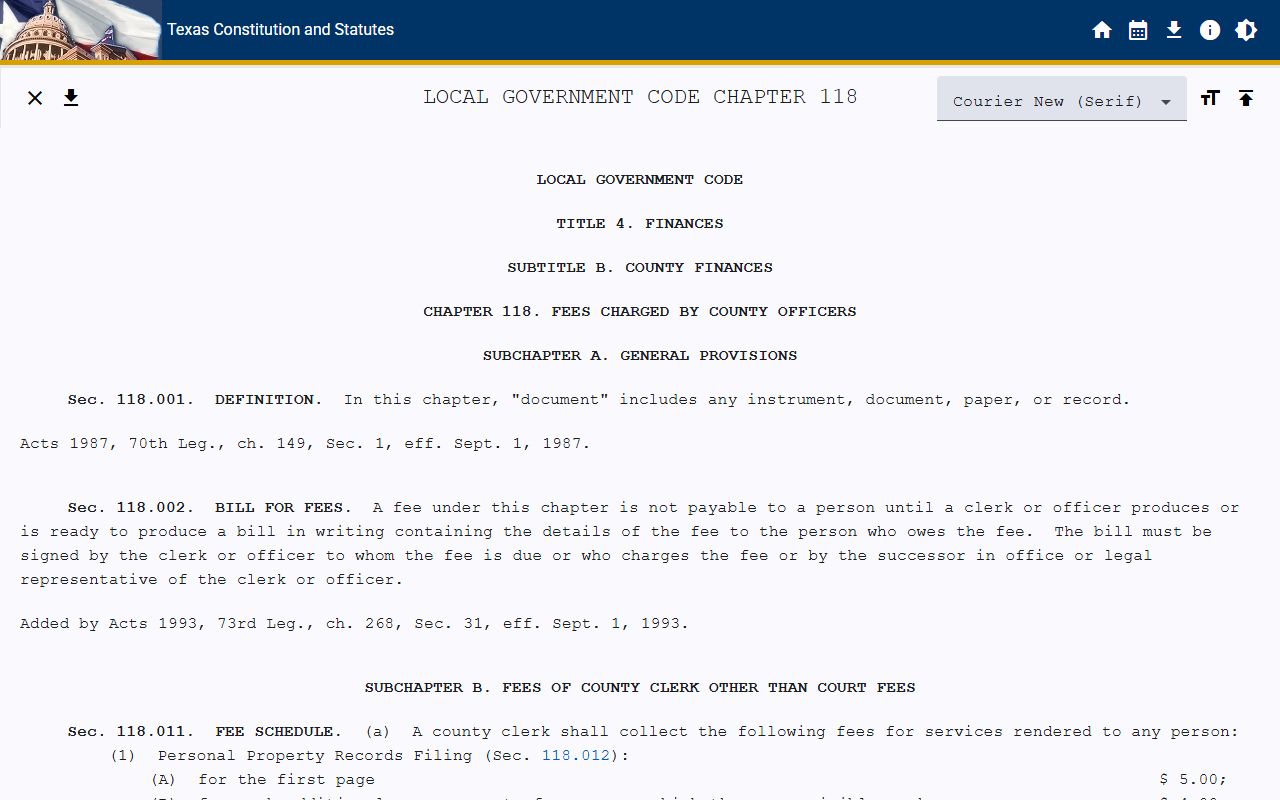
That chapter is why a recorded deed costs more than a single photocopy, since several state-mandated fees are bundled in.
Records That Are Exempt
Some categories of government information are not public, even under a broad open-records policy. The Act lets an office withhold law-enforcement information under Section 552.108 when release would interfere with an active investigation or prosecution. Driver and motor vehicle data is protected under Section 552.130, which is why traffic and crash records show redacted license or plate details. Living persons' Social Security numbers are redacted under Section 552.147 without an Attorney General decision.
Other records are confidential by statute. Juvenile and adoption records are restricted under the Family Code. Mental health and medical information is heavily protected. Military discharge documents recorded with the County Clerk are confidential for a long period under Section 552.140. So a request can be partly granted with sensitive fields redacted, rather than denied in full.
County Clerk Property Alert
The County Clerk offers a property alert tool as a fraud-prevention service. It lets a property owner sign up to get notified when a document is recorded against their name or real property. The point is to catch a potentially fraudulent claim or transfer early, before it does damage. This is a free public service tied to the same records system that backs the official records portal.
Tip: Property owners in Brownsville, Harlingen, and across Cameron County can register for the County Clerk property alert to watch for suspicious filings on their land records.
Because the alert draws on recorded official records, it pairs well with an occasional search of the official records portal to confirm what is on file under your name.
Self-Help and Statewide Resources
The County Clerk links two statewide self-help resources, both tied to a state law on legal aid and self-help access. These are official sites, not third-party services, and they help with forms, guides, and plain-language legal information. They do not replace a clerk record, but they make a request or a filing easier to prepare.
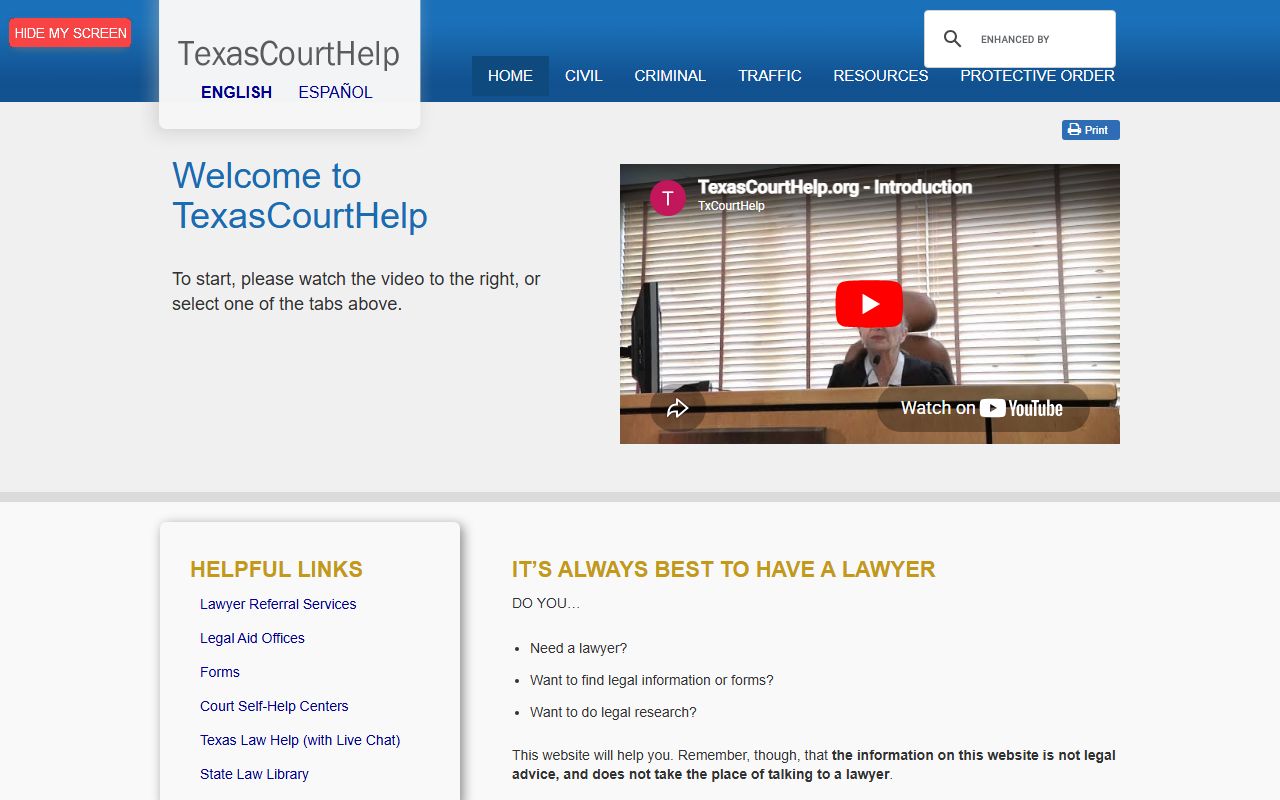
Texas Court Help offers guides for common case types and points to local courts. See Texas Court Help for those resources.
The Texas State Law Library is the other resource the County Clerk recommends, with legal research tools and statute access.
The State Law Library also keeps practice guides and form sets that the public can use for free. Visit the Texas State Law Library to reach those collections.

One more caution worth repeating: not every public document is instantly downloadable, since some records are sealed, fee-based, in older archives, or available only by clerk request.